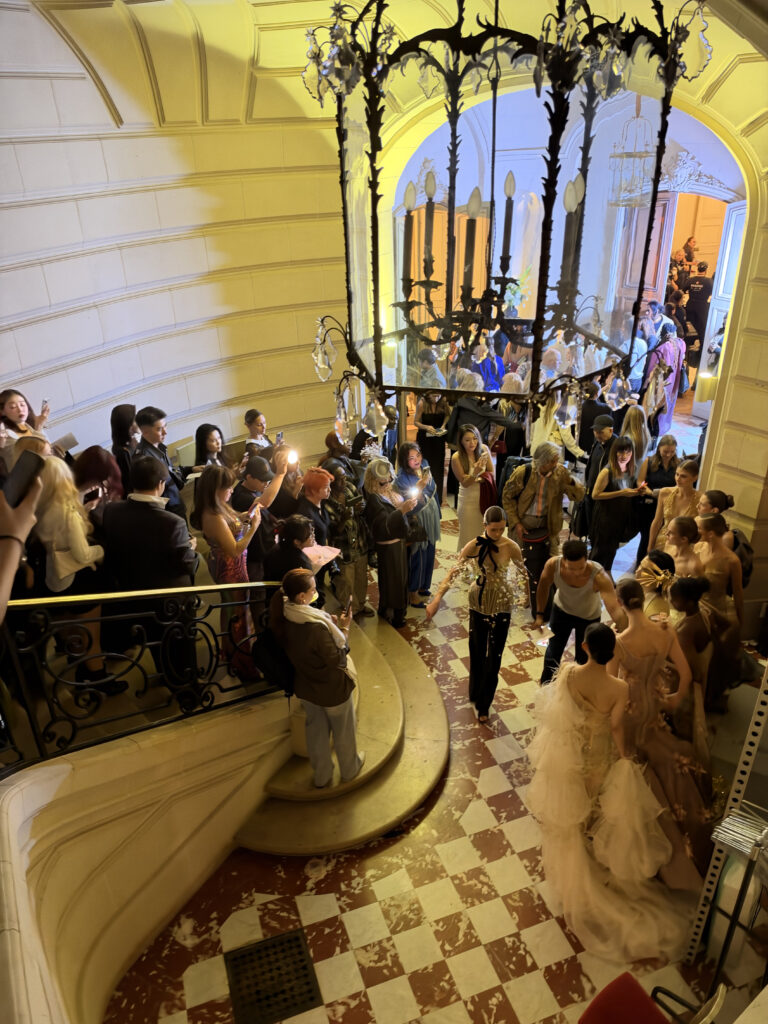
Presented at the Maison de l’Amérique Latine, “Numéro 6: Vũ Khúc Cố Đô” translated architecture, silk and the memory of Vietnam’s former imperial capital into one of the most coherent collections of the evening.
A Storm as a Structure
There are collections whose concept only becomes clear after reading the press notes. With Numéro 6: Vũ Khúc Cố Đô, the opposite happened. Before fully understanding the references to Huế, its imperial architecture or the different stages of a storm, NGUYEN PHUC TUAN’s intention was already visible on the runway.
Presented in Paris for Spring/Summer 2027, the designer’s sixth collection began with something deeply rooted in his memory of Huế: rain. Not as a decorative motif, but as a way of structuring both the show and the progression of the clothes.
The title, Vũ Khúc Cố Đô, translated by the designer as The Citadel’s Rainwaltz, refers to that landscape. The collection was divided into three movements — Rain Prelude, Rain Climax and Rain Coda — corresponding to the moments before a storm, its most intense point and the calm that follows. It could easily have remained an abstract concept, yet the idea was translated with surprising clarity into silhouette, texture and movement.
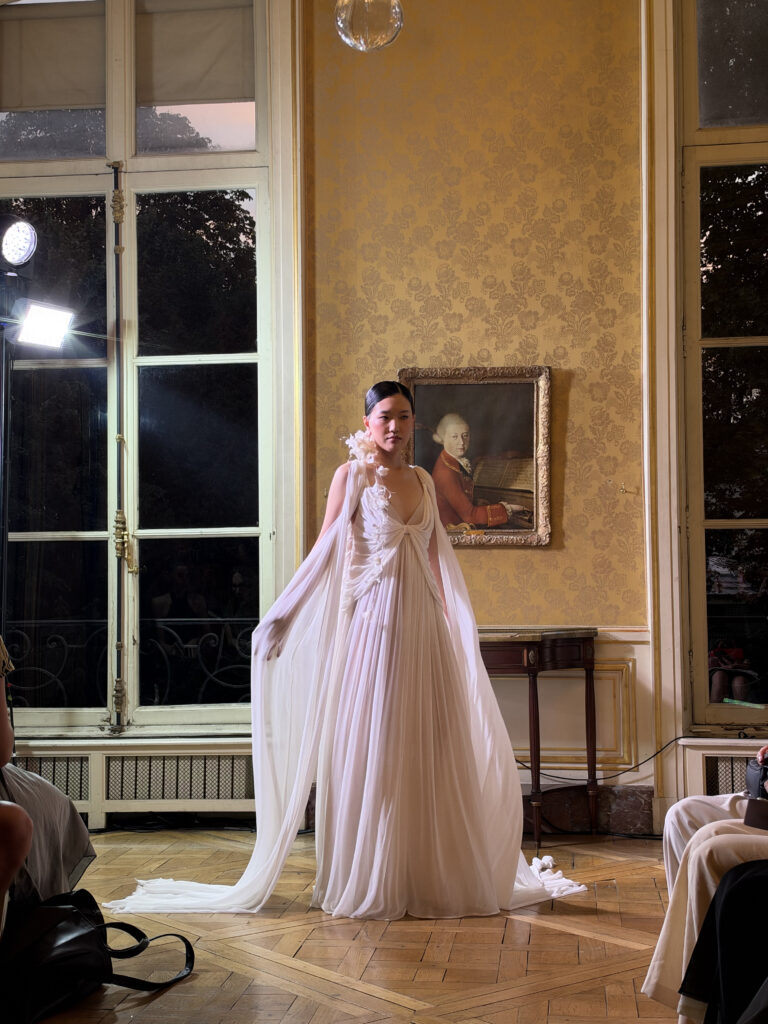
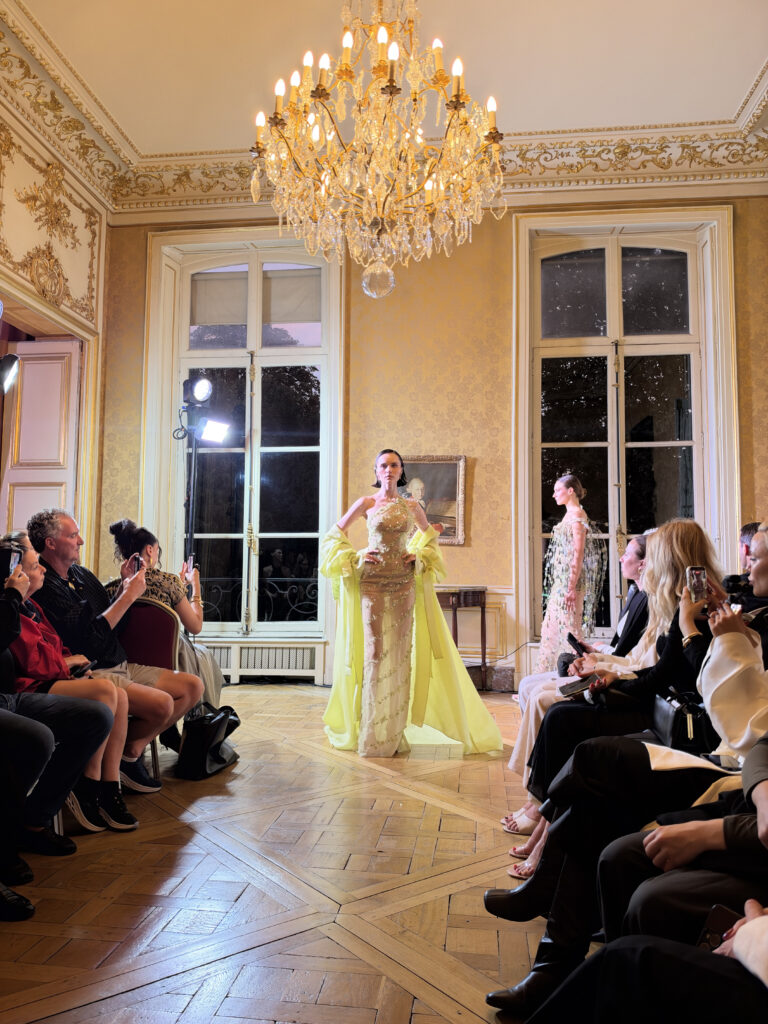
The opening looks introduced a soft palette of pale yellows, lilacs, beige and washed gradients that suggested a humid sky without resorting to literal imagery. Draping and fluid silhouettes defined this first section, while lighter fabrics shifted visibly as the models moved.
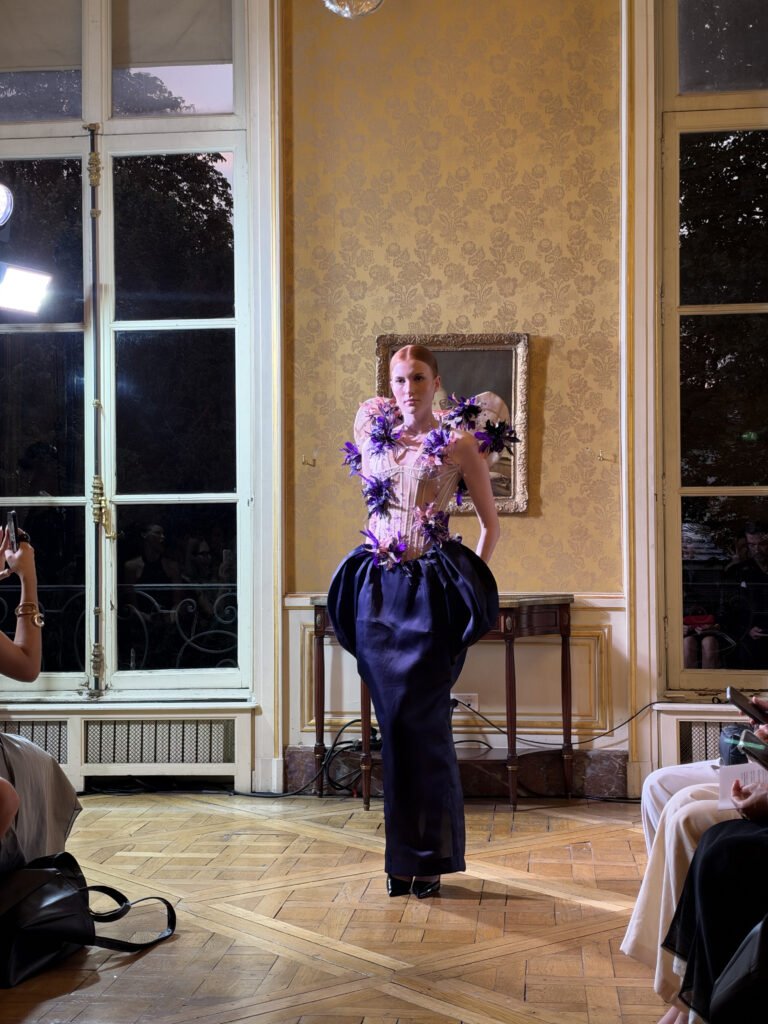
As the show progressed, that softness gave way to more structured constructions. Corsetry became more prominent, and transparency was set against increasingly sculptural volumes. It was precisely within that tension between delicacy and structure that the collection reached some of its strongest moments.
When Volume Takes Over
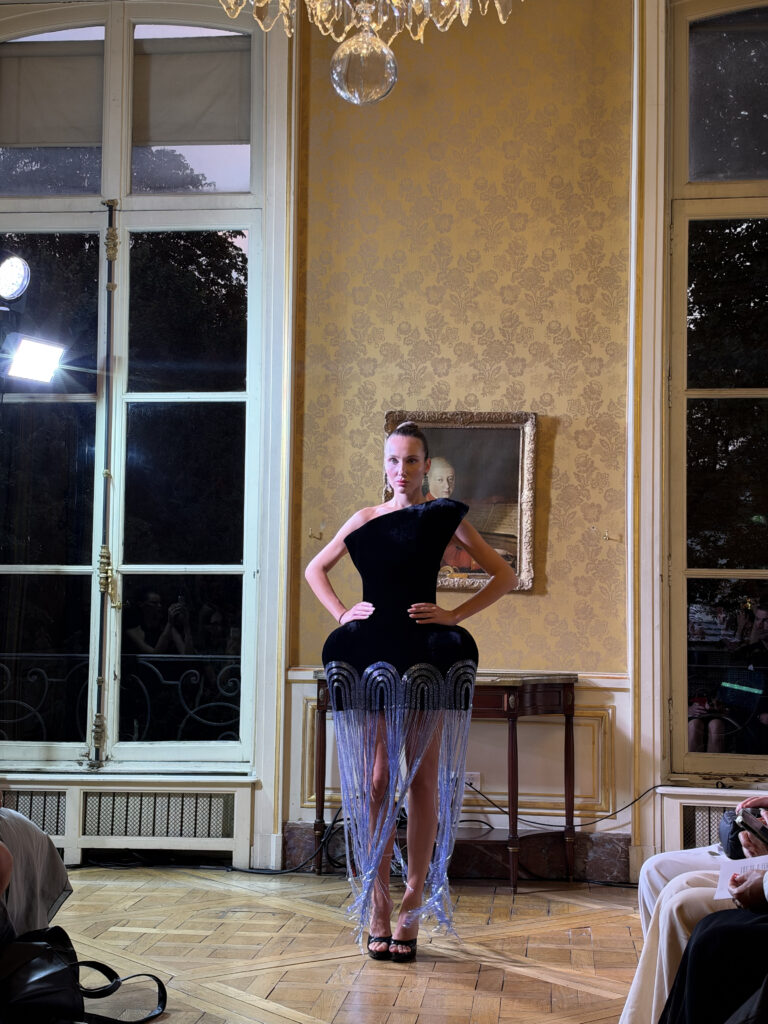
One of them was a voluminous black dress that disrupted the pastel palette and completely altered the scale of the body. Its silhouette inevitably entered a broader conversation that has been present in fashion for several seasons: the return of exaggerated proportions, sculptural volume and garments that behave almost like architecture.
Yet the piece did not feel derivative. Its construction, and particularly the way it related to the rest of the collection, gave it a distinct identity.
That ability to engage with contemporary fashion language without dissolving into it was one of the most compelling aspects of the show.
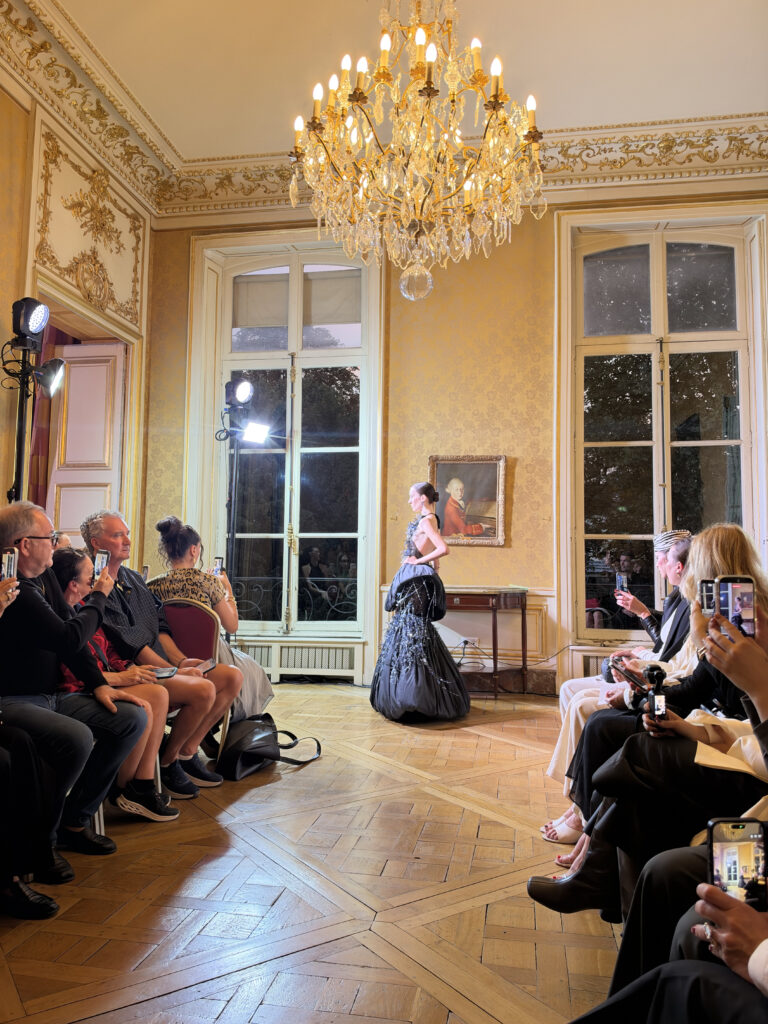
The body-conscious dresses were equally convincing. Their impact did not rely simply on fitted silhouettes, but on the work taking place across their surfaces. Ruching, layering, appliqué, embroidery and three-dimensional details altered the body rather than merely following it.
Seen in person, that level of construction became much more apparent. The garments revealed a degree of craftsmanship that photography cannot always fully capture.
The collection notes reference techniques including 3D form-building, layering, ruching, bias cutting, crystal embroidery and hand-finishing. On the runway, these were not decorative talking points but structural tools. Some pieces appeared to be built directly around the body, while others expanded it through volume; transparency, meanwhile, often revealed the internal logic of the garment rather than simply exposing skin.
A Study of Femininity
The result was a carefully considered vision of femininity. NGUYEN PHUC TUAN did not oppose sensuality and strength, but allowed both to exist within the same silhouette.
Defined waists, corsetry and fitted dresses coexisted with much broader proportions without creating a break in the overall language of the collection. The body remained central, but it was treated as something to shape, extend and reframe rather than merely reveal.
That coherence was, arguably, its greatest strength.
Vietnam as a Point of Departure
The cultural references were handled with similar restraint. Descended from the Nguyen dynasty, the designer has long drawn on the memory of Huế and its imperial heritage. Here, architectural references were translated into proportion, line and construction rather than reproduced as obvious visual symbols.
The collection also introduced a dialogue between Vietnam and France. According to the show notes, one of the evening looks brought together references to traditional Vietnamese dress, the Eiffel Tower, Versailles, the Trường Tiền Bridge and the Thiên Mụ Pagoda. The palette, too, was conceived as a bridge between both contexts, connecting the violet tones of Huế sunsets with the atmospheric qualities associated with Claude Monet.
On paper, this could read as an excess of references. On the runway, it did not.
The reason is that the collection seemed less interested in representing Vietnam than in working from Vietnam. That distinction matters. Its identity did not depend on immediately recognisable symbols, but on material, technique and the way the garments were constructed.
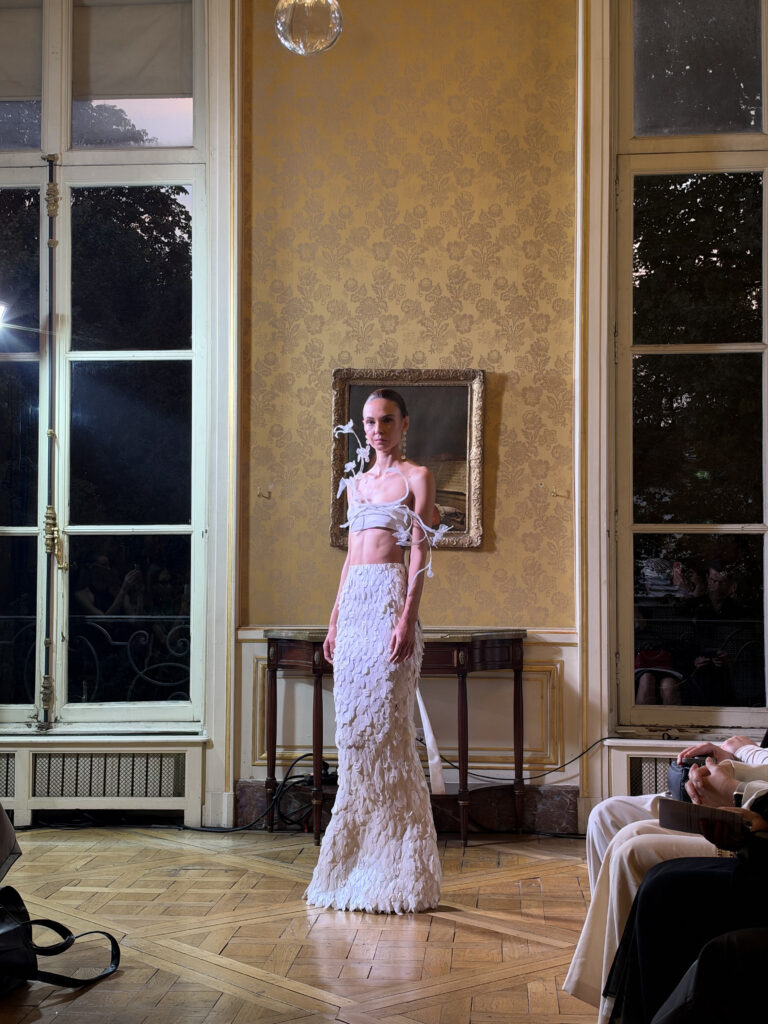
The use of Bảo Lộc silk was central to that approach. Satin, organza and raw silk were treated differently depending on the needs of each silhouette, moving from sheer, fluid pieces to more structured forms. Vietnamese craftsmanship was therefore integrated into a contemporary design language rather than presented as an ornamental or nostalgic reference.
After the Rain
The show concluded with a bridal look made entirely from silk taffeta. Its tiered volume and structured corset returned the collection to a lighter register after its more dramatic moments, echoing the idea of clouds beginning to disperse after a storm.
It was a logical conclusion to the narrative established from the opening looks.
After seeing so many collections, one of the things I value most is the rare moment when there is genuine correspondence between what a designer claims to be expressing and what actually appears on the runway. In this case, the press release was not needed to justify the concept: the progression of the silhouettes, the intensity of the volumes, the treatment of the surfaces and the overall atmosphere of the show had already communicated it.
Vũ Khúc Cố Đô stood out not because of one isolated gesture, but because of the precision with which it sustained a single idea throughout the collection. NGUYEN PHUC TUAN presented a technically accomplished and deeply feminine proposal, but its most convincing quality was the way it transformed a memory rooted in Huế into a visual language capable of travelling far beyond it.